




Oral Surgery Associates
On the Field and Court – Facial Injuries
It used to be that we would see most of our sports-related facial trauma patients in the fall and winter, when sports participation typically reached its highest point. But nowadays, we see a steady stream of sports injuries to the face in our office year-round. Because more children, teens and adults participate in sports in all four seasons (which is great), we see more sports-related facial injuries now than ever before (not so great).

Not only is the face the most vulnerable part of the body during a game, it is also almost always under-protected. Facial injuries account for about 11-40 percent of all sports injuries. Even in a “no-contact” or “less-contact” sport where player-to-player injuries are rare, a person can still be hit by a ball, bat, club or other item and experience trauma to the face.
Two types of sports-related facial traumas make up the majority of cases we see:
- Soft Tissue Injuries: Lacerations are a common type of injury when playing a variety of sports. In addition to cleaning and suturing the cut, we also pay special attention to providing for the best possible cosmetic result and thoroughly examine any nerves, glands and ducts that may have been injured.
- T-Zone Fractures: Also very common with sports injuries are fractures of the nose, zygoma (cheek bone) and mandible (jaw). Because we can’t put a cast on the face, sometimes fractures must be stabilized using wires, screws and plates.
How to Prevent Facial Injuries on the Field and on the Court:
Many of the most common sports-related facial injuries are also preventable. Here are some of the best ways to protect your face when playing any sport where injury to the tooth or face is a risk:
- Mouth Guards: Simple, inexpensive and increasingly mandatory in many sports, mouth guards are the first defense against injury to the tooth, and may even help to lessen or prevent concussions!
- Face Masks: As time goes on, you will see more and more sports, most recently softball, requiring facemasks to protect young players.
If you have any questions about how to protect yourself from sports-related facial trauma, don’t hesitate to ask us!
Facts About Bone Grafting
Did you know that with today’s modern techniques, bone grafting is now considered a routine treatment? A bone graft can fix a variety of facial and dental problems and may be required in some cases. If you’ve been told in the past that you’re not an ideal candidate for getting a tooth implant, call us to ask about how a sinus graft makes it possible for many of our patients to receive dental implants. Here are a few things you should know if you’re thinking about getting a dental implant or think a bone graft could help you.
It’s a routine procedure!
Bone grafting has become a standard practice. Depending on the quantity and quality of jawbone, most procedures take place in our office and we use local anesthesia or conscience sedation to relieve any anxiety.
Bone loss has been virtually eliminated!
The only reason our jaws have the amount of the bone that they do is because of the presence of existing teeth. Complicated procedures were developed in the past to attempt to rebuild jaws that had atrophied due to missing teeth and disuse but with the modernization of bone grafting and dental implants, we can prevent jawbone atrophy all together.
There are a variety of materials that can be used.
The bone grafting material you need could come from a variety of sources. Generally, we use bone taken from your hip, jaw, or lower knee but today we have the ability to grow bone where needed or obtain bone from a tissue bank. We also use special membranes to help protect the bone graft and encourage bone regeneration.
Bone grafting allows your body to rebuild itself.
The human body uses most bone grafting materials as a frame on which it can grow new bone. Over time the graft material will be replaced with new bone through your body’s own process of bone regeneration. Maintaining a healthy amount of bone tissue around your teeth is crucial in keeping up your oral health.
If you have a missing tooth, congenital defect, or have had a traumatic jaw injury, and you’re wondering whether you may need bone grafting, give us a call. We can answer your questions, and present the treatment options that are best in your individual situation.
Dental Implants vs Dentures and Bridges
Whether it was during a consultation in our office or perhaps while you were doing your own research online, you have probably come across the term “dental implant” at some point. A dental implant is a great way, often the best way, to replace a missing tooth.
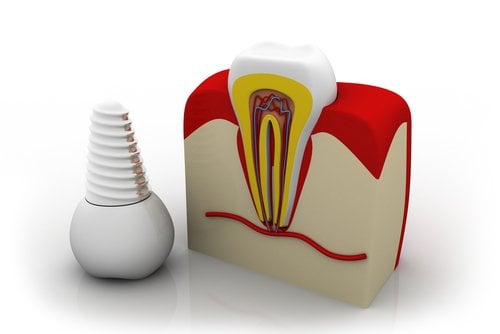
So how do you decide if a dental implant is the right path for you, or if a more traditional tooth replacement method such as dentures or bridges is the best way to go?
We have been asked this question many times, and have compiled a comprehensive breakdown of the benefits that implants offer over their conventional counterparts. We hope that this guide will help make the decision process easier for you.
Dental Implants vs. Dentures and Bridges: Things to Consider
- Longevity: Dental implants offer a long-term solution (often lasting a lifetime) to missing teeth, while dentures and bridges require replacement every 5 to 10 years. Not only does this mean less hassle, it also means that implants may be more affordable over time.
- Quality of Life:
- Simply put, dental implants look, feel and function more like natural teeth than do dentures and bridges.
- With a dental implant, our patients can hardly notice the difference when biting into hard objects. They also look more natural.
- In addition to that, dental implants are fixed – they are not going to fall out while you are talking or smiling, and you don’t have to put them away each night when you go to sleep. They remain in your mouth, anchored to your jawbone at all times.
- Bone Stability and Health: Just like muscles, bones also need a “workout” in order to maintain their mass and health. So when a tooth is missing from the jawline, the bone underneath the old tooth site becomes atrophied and shrinks. Dentures and bridges do nothing to help this deterioration. However, dental implants actually screw into the bone and integrate with it, actually encouraging new bone growth.
- Overall Health: Because implants allow for a normal range of food choices in the diet (a benefit not afforded by dentures), they encourage you to continue your healthy lifestyle for the rest of your life!
Do you still have questions? As always, we are here to answer any questions you have. Give us a call for more information!
Our New Blog!
Our blog has recently been set up. Please check back soon!